The Truth About Chemotherapy: What You Really Need to Know to Beat Cancer
When I was diagnosed with Stage 2b triple negative breast cancer at 29, I believed what most newly diagnosed patients believe: surgery would remove the tumor, and chemotherapy would "mop up" any remaining cancer cells.
Get through cancer treatment as quickly as possible. Problem solved.
Except it’s not that straight forward.
Let me explain why.
Fifteen years ago, I had a complete response to chemotherapy. My tumor disappeared. I survived cancer and still thriving today, however….
……Other women with the exact same diagnosis—same stage, same type, same treatment protocol—didn't respond the same way.
Some had partial responses.
Some had no response at all. Their tumors grew during treatment.
Same cancer. Same chemo. Completely different outcomes.
Why is that?
The Dangerous Assumption No One Questions
This is what most of have been conditioned to believe.
"Surgery will get rid of the tumor mass, and chemotherapy will mop up any circulating cancer cells."
You've probably heard some version of this. Maybe from your oncologist. Maybe from well-meaning friends. Maybe you've said it to yourself, trying to make sense of what's ahead.
And it sounds logical, right? Surgery removes the bulk. Chemo cleans up the stragglers.
But here's what that statement implies: that chemotherapy will definitely work. That "mopping up" is a guarantee. That if you just endure the treatment, you'll be cancer-free on the other side.
That's not the full truth.
The reality? Chemotherapy only works if your cancer cells are sensitive to that specific chemotherapy agent.
Not all cancer cells are.
The Harsh Reality: Why Some Respond and Others Don't
Let me break this down in plain English, using my background as a PhD biochemist who also lived through this as a patient.
When your oncologist recommends a chemotherapy protocol, they're basing it on what works for the majority of patients with your cancer type. Standard treatment. Gold standard. Best practice.
But here's what "standard treatment" really means:
Some patients will have a complete response (tumor disappears entirely—this was me)
Some will have a partial response (tumor shrinks but doesn't disappear)
Some will have no response (tumor stays the same or grows despite treatment)
Why the difference?
Because chemotherapy drugs work by targeting specific vulnerabilities in cancer cells. Think of it like a lock and key. The chemo drug is the key. Your cancer cell's characteristics are the lock.
If they match? The drug works. The cell dies.
If they don't match? The drug flows through your bloodstream, causes side effects, makes you sick—but doesn't kill the cancer.
Your tumor cells have to be chemosensitive for that particular drug for it to work.
And here's the question you should be asking:
How do you know if your specific cancer cells are sensitive to the chemotherapy protocol being recommended?
Most patients don't ask this question. They trust the "standard treatment" and hope for the best.
But here's what you need to understand: you're being treated based on statistics—what works for the majority of patients with your cancer type—not necessarily what will work for your specific cancer cells.
This is the gap in personalized care that no one talks about. And it's a gap you need to investigate for yourself.
Now let me tell you about something even more important that is closely related: a concept called “The Critical Balance”.
The Critical Balance That Could Save Your Life
This is the concept that is so crucial for chemo to be life-saving. And it's something I wish every newly diagnosed patient understood before going through chemo.
Here's the truth your oncologist might not explicitly say out loud to you:
Chemotherapy can save your life. Or it can kill you.
I’m not here to dissuade or persuade you. I’m here to educate you.
There is a delicate balance that must be maintained throughout treatment.
Let me explain what I mean.
Chemotherapy and radiation work like missiles in warfare. They're designed to go after fast-growing cells—like cancer. But they don't discriminate perfectly. They also hit other fast-growing cells in your body: hair follicles, gut lining, bone marrow.
That's why you lose your hair. That's why you feel nauseated. That's why your immune system crashes.
But here's the important part most people need top of mind when battling cancer:
Successful cancer treatment must be aggressive enough to stop the disease while preserving your body's ability to recover and prevent recurrence.
Think about that for a second.
If treatment is too harsh, your body becomes too depleted to recover. You become vulnerable to life-threatening infections, organ failure, extreme weight loss. Many people don't die from cancer itself—they die from complications when their body is too weak to bounce back from treatment.
If treatment is too mild or ineffective, the cancer adapts, grows, spreads. Disease progression. Treatment is deemed a failure.
It's a razor-thin line.
And striking that balance requires strategic thinking—not just blind endurance.
What "Strategic Thinking" Actually Looks Like
Most patients approach chemotherapy with an "endure and survive" mentality.
Just get through it. Grit your teeth. White-knuckle each session. Count down the days until it's over.
I understand that instinct. I felt it too.
But here's what I learned: being strategic is different from being strong.
Strategic thinking means:
1. Being Curious, Not Passive
Don't just accept every recommendation at face value.
Ask questions:
What are the side effects of this specific drug?
Are there alternatives?
What will this do to my immune system, my energy, my long-term health?
Has chemosensitivity testing been considered for my case?
What markers will we track to know if this is working?
2. Understanding Your Body's Limits
Everyone's body is different. What one person tolerates might overwhelm another.
A 40-year-old marathon runner with no underlying health conditions can typically handle more aggressive dosing than someone with diabetes and heart disease.
Strategic thinking means knowing when to push and when to support your body's recovery.
3. Balancing Attack with Recovery
Yes, you need to fight the cancer aggressively. But you also need to fuel your body for that fight.
That means:
Protecting your gut health (which affects immunity and nutrient absorption)
Preserving muscle mass (not just "getting through" treatment while wasting away)
Reducing inflammation (which cancer uses as fuel)
Supporting detoxification pathways (especially during chemo)
Your oncologist may focus on the cancer. You need to focus on the whole system.
4. Knowing Your Numbers
Strategic patients track key indicators:
White blood cell counts (immune function)
Inflammatory markers (CRP, IL-6)
Vitamin D levels
Nutritional status markers
These numbers give you feedback about how your body is coping—and help you make adjustments before you crash.
5. Understanding That "Standard" Doesn't Mean "Optimal for You"
Standard treatment is designed for the average patient.
But you're not average. You're a unique individual with specific:
Genetics (which affect how you metabolize drugs)
Baseline health
Cancer characteristics
Life circumstances
Strategic thinking means asking:
"Given my age, health history, and current condition, how should this standard protocol be modified for MY body?"
The Wake-Up Call You Need to Hear
Right now, you're probably in one of two places:
Place #1: You haven't started chemotherapy yet. You're researching, preparing, terrified of what's coming.
Place #2: You're already in treatment, just trying to survive each round, hoping it's working.
Either way, here's what you need to understand:
The decisions you're making right now—or NOT making—are determining whether you'll be in the complete response group or the partial response group.
Whether your cancer cells are sensitive to the drugs you're receiving.
Whether your body will be strong enough to recover after treatment ends.
Whether you'll spend the next five years in cancer limbo, terrified of every ache, or whether you'll truly heal and reclaim your life.
This isn't about being "positive enough" or "fighting hard enough."
This is about being strategic.
And strategic thinking requires knowledge. Frameworks. Systems.
Not just hope. Not just endurance.
What You Need to Do Next
The truth about chemotherapy—the complete truth—involves understanding 10 fundamental principles about cancer treatment that most patients never learn.
The critical balance is just one of them.
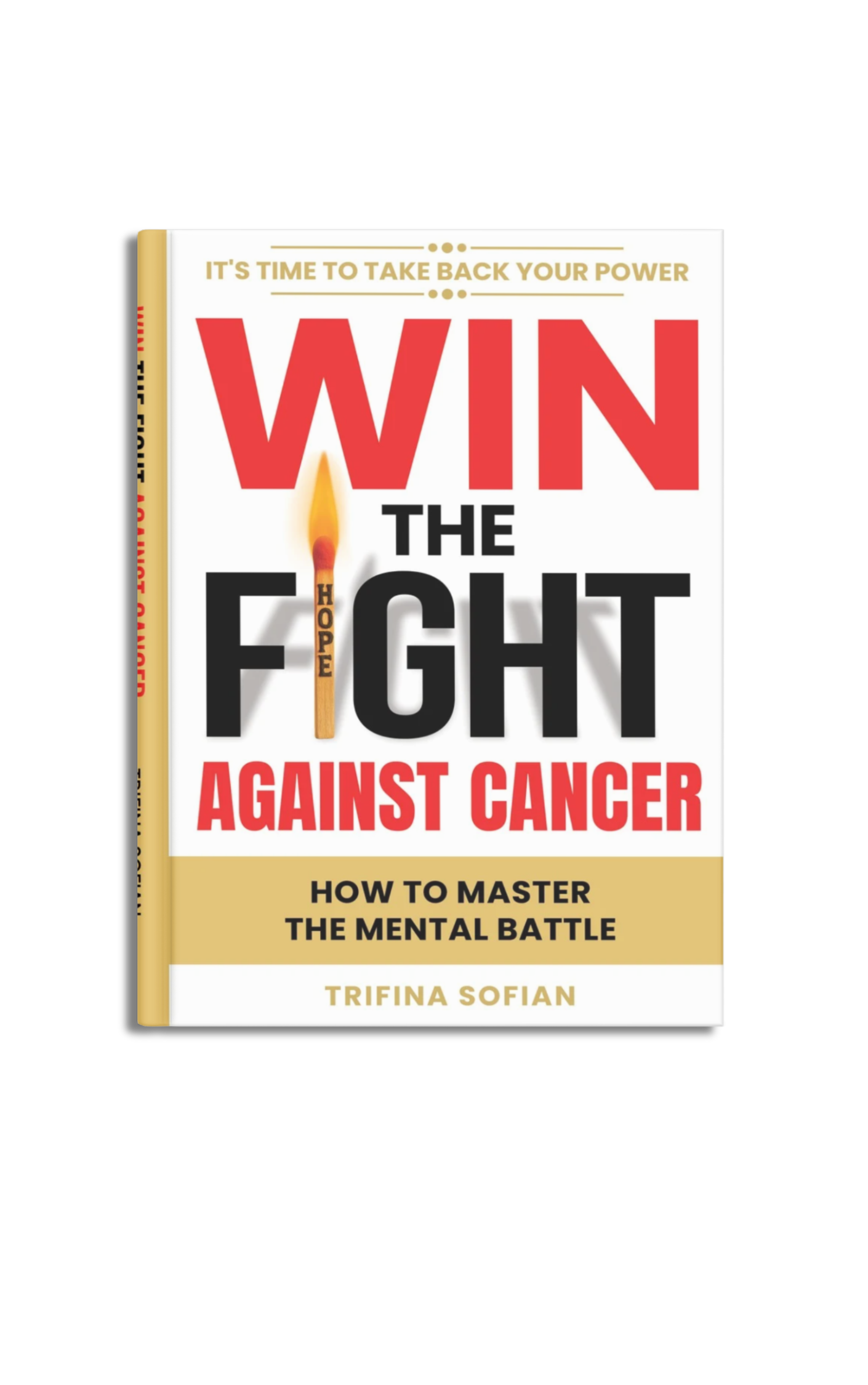
In my book, "Win the Fight Against Cancer," I walk you through all 10 principles in
Chapter 7: "Be Smart and Strategic."
This chapter covers:
Principle #1: Critical Balance (what we discussed here—how to attack cancer while protecting your body's ability to recover)
Principle #2: Characteristic (understanding your specific cancer's behavior, growth patterns, and vulnerabilities)
Principle #3: Control Pathways (the molecular switches that drive your cancer—and how to shut them down)
Principle #4: Environment Matters (why the "soil" your cancer grows in is just as important as the cancer itself)
Principle #5: Adaptation (how cancer evolves and becomes resistant—and how to prevent it)
Principle #6: Individual Variation (why the same treatment affects different people differently)
Principle #7-10: (I won't spoil them all here, but they build on these foundational concepts)
But Chapter 7 isn't the whole book.
The book follows a three-phase framework:
PHASE 1: GROUND (Finding emotional stability so you can think clearly)
PHASE 2: LEAD (Taking command of your cancer journey and becoming the CEO of your healing)
PHASE 3: SUCCEED (Strategic thinking, focused action, and reclaiming your life)
Throughout, I share frameworks:
For processing fear
For emotional regulation
First principles thinking applied to cancer treatment
How to advocate for yourself without alienating your medical team
The difference between surviving cancer and truly living after it
This isn't a book about green smoothies and meditation (though those have their place).
This is a book about thinking strategically, making informed decisions, and becoming an active participant in your healing—not a passive patient hoping for the best.
The Decision You're Making Right Now
Every day you wait is a day your cancer cells are adapting, evolving, learning how to survive.
The women who beat cancer long-term? They didn't have better doctors or more medical knowledge than you. What they had was a SYSTEM for thinking strategically about their treatment—and they learned it EARLY, before chemo started, not after it failed.
Chapter 7 takes 20 minutes to read. Your next oncologist appointment is probably in a few days.
Don't walk into that room without understanding the critical balance, chemosensitivity testing, and the 10 strategic principles that separate complete responders from partial responders.
This book costs less than parking at the cancer center, but it's the difference between being a passive patient hoping for the best and a strategic CEO stacking the odds in your favor.
You're either ahead of the curve or behind it—and that decision happens now, not later.

Trifina Sofian is a coach specializing in cancer recovery. She helps you feel calm and in control so you can focus on the most important things, and be strategic in beating cancer.
Get her powerful new book Win the Fight Against Cancer - How to Master the Mental Battle HERE and start fighting smarter today!